%20rotate(90)%22%2F%3E%0A%20%20%3Crect%20class%3D%22cls-2%22%20x%3D%22901.37%22%20y%3D%225.34%22%20width%3D%2212.12%22%20height%3D%22352.95%22%20transform%3D%22translate(1089.25%20-725.61)%20rotate(90)%22%2F%3E%0A%20%20%3Ccircle%20class%3D%22cls-1%22%20cx%3D%22730.95%22%20cy%3D%22181.82%22%20r%3D%2218.18%22%2F%3E%0A%3C%2Fsvg%3E)

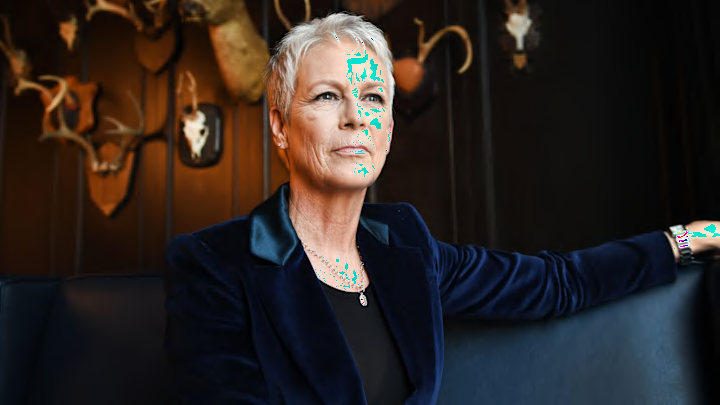
One of Jamie Lee Curtis’ most polarizing horror films is making its way to Netflix next week, and it's expected to bring renewed attention to the modern slasher entry that continues to split fans years after its release.
While Curtis is best known in the genre for her legendary role as Laurie Strode in the Halloween franchise, not every installment of her return has been met with universal praise. One film in particular has stood out as especially polarizing, both for its bold creative risks and its unexpected narrative direction.
That film is Halloween Ends (2022), the final chapter in David Gordon Green’s reboot trilogy. And as it gets ready to land on Netflix soon, it’s expected to once again reignite debate over whether it delivers a bold new vision for the franchise or a frustrating conclusion to one of horror’s most iconic stories.
Halloween Ends is coming to Netflix in April 2026

Halloween Ends will be released on Netflix on Monday, April 13, 2026. The streaming service confirmed the date as part of its full April lineup, which includes all the movies and shows coming to the platform that month.
While we don't know the exact time the film will drop on Netflix, it might be released at 12:00 a.m. PT/3:00 a.m. ET on its release date. That's when we usually see the streaming giant drop new content on its platform. That's just something to keep in mind!
David Gordon Green helmed Halloween Ends from a screenplay he co-wrote with Paul Brad Logan, Chris Bernier, and Danny McBride. The film serves as a sequel to 2018’s Halloween and 2021’s Halloween Kills, both of which were designed to directly continue John Carpenter’s original 1978 classic while ignoring the franchise’s multiple alternate timelines and reboots.
The modern trilogy brought Michael back as this almost mythic force of pure evil, while Laurie once again stepped into the role of his ultimate survivor. The 2018 film zeroed in on the lasting trauma of what it means to live through that kind of horror, while Halloween Kills turned things up dramatically. It escalated the violence and chaos in Haddonfield as Michael’s rampage reached new extremes.
By the time Halloween Ends arrives, however, the story makes a noticeable shift in tone and structure. Rather than functioning purely as a continuation of a relentless slasher narrative, the film attempts to explore the aftermath of horror. It explores what new forms of darkness can emerge in its wake.
Set four years after the events of Halloween Kills, the film opens in a version of Haddonfield that is no longer actively under siege but still emotionally fractured. However, the absence of Michael does not mean peace has returned. Instead, it has left behind lingering fear, resentment, and unresolved trauma.
Laurie, played by Curtis, is attempting to rebuild her life in this new normal. For the first time in decades, she is not living in constant anticipation of Michael’s return. Instead, she is writing, reflecting, and trying to create a future with her granddaughter Allyson. But even as Laurie tries to move forward, the town itself remains trapped in its own psychological aftermath.
The film’s most controversial narrative shift comes with the introduction of Corey Cunningham, a young man whose life is permanently altered after a tragic accident in which a child dies while he is babysitting. Although the death is ruled accidental, Corey becomes an immediate outcast in the community.
This rejection becomes the foundation for the film’s second half, as Corey slowly begins to unravel under the weight of social condemnation. Rather than relying solely on Michael as its central figure of terror, the film uses Corey’s storyline to explore how trauma and public judgment can transform an already vulnerable person into something far darker.
This shift in focus is precisely why Halloween Ends remains so divisive. Many viewers expected a straightforward slasher finale centered on Laurie's ultimate confrontation with Michael. Instead, they were met with a film that splits its attention between multiple characters and explores psychological themes more than traditional horror structure.
For some audiences, this approach was a refreshing evolution of the franchise. But for others, it felt like a departure from what made the series iconic in the first place, particularly given Michael’s reduced screen time.
Besides Curtis, the slasher's cast includes Andi Matichak, James Jude Courtney, Will Patton, Rohan Campbell, Kyle Richards, and others.
With Halloween Ends arriving on Netflix next week, the film is poised to be discovered by audiences who may not have seen it in theaters or who are willing to reassess it outside of initial expectations. Perhaps this second life on streaming will soften its divisive reputation or reaffirm it entirely as one of the most controversial entries in the modern Halloween saga.
 Add us as a preferred source on Google